iOccupationalTherapy.com – Call us: 866-782-9924

What Are Evidence-based OT Interventions To Reduce Unwanted Behaviors In Clients With Dementia?

Kathleen Weissberg, OTD, OTR/L

December 1, 2017

Share:

Question

What are evidence-based OT interventions to reduce unwanted behaviors in clients with dementia?

Answer

If you have your folks using the elevator and you still want your visitors to be able to use the elevator, I think you need to communicate that. Oftentimes, you can have a sign on the outside of the facility that indicates that the elevator is in fact in working order despite the signage that is there. Maybe it is something that you send home with your families.

You would have to check with each of your state-specific guidelines related to that. I have not seen anything specific. Most of the states will be on board with your signage, with your camouflage, what have you, providing that number one, you are not violating HIPAA, and also, that you have it appropriately care planned. I have not seen too many issues with that.

Change the facility. I say that facetiously, but I mean that. If nothing else, every nursing home is now required to meet a whole new host of regulations related to participation, and those new rules just came out the end of November. We have three years to comply with all of those rules. If you read through them, they are resident-directed care and person-directed care. It talks about flexibility of the schedule, flexibility of what we provide to our residents, and that it is the residents' schedule, and not ours. That is really a learning curve that we have to get around in our facilities. Obviously all things cannot be flexible, I get that, but some things certainly can be. Meal time, bath time, bed time, and therapy times can be flexible. 

I generally go back to the occupational profile, but I have to be honest with you, they are pretty old school. However, I still use my interest and roles checklist, and those have been around for a long time with OTs. I also use another tool that you may or may not have heard of, the PELI. The MDS is actually based on it, and it goes through every activity you could imagine for that person so that we can try to get an idea of what they like, and I really do like my COPM as well. I think you can kind of use anything there, I think, as long as it hits on all of the questions that are in the profile.

The vast majority of our facilities do not have that kind of money, do they? I think what you can do is create an area. Would I do it in a client's room? Probably not, because I do not think you want all of that sensory stuff going on at all times in the client's room. You can certainly find cost effective sensory equipment. Some of those fiber optics and tactile things can be frabricated. I think you can certainly do that cost effectively. I will tell you, a good friend of mine has done some really great research on Snoezelen. She created it herself and did get a lot of the same types of benefits from it.


kathleen weissberg

Kathleen Weissberg, OTD, OTR/L

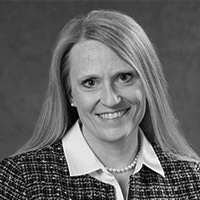
Dr. Kathleen Weissberg, (MS in OT, 1993; Doctoral 2014) in her 25+ years of practice, has worked in rehabilitation and long-term care as an executive, researcher and educator.  She has established numerous programs in nursing facilities; authored peer-reviewed publications on topics such as low vision, dementia quality care, and wellness; has spoken at numerous conferences both nationally and internationally, for 20+ State Health Care Associations, and for 25+ state LeadingAge affiliates.  She provides continuing education support to over 17,000 therapists, nurses, and administrators nationwide as National Director of Education for Select Rehabilitation. She is a Certified Dementia Care Practitioner and a Certified Montessori Dementia Care Practitioner.  She serves as the Region 1 Director for the American Occupational Therapy Association Political Affairs Affiliates and is an adjunct professor at both Chatham University in Pittsburgh, PA and Gannon University in Erie, PA. 


Related Courses

Elder Abuse and Child Abuse: Know the Signs and Your Role
Presented by Kathleen Weissberg, OTD, OTR/L
Video

Presenter

Kathleen Weissberg, OTD, OTR/L
Course: #4370Level: Intermediate1 Hour
  'Very organized'   Read Reviews
Elder abuse and neglect and child abuse and neglect are harsh realities. This course will identify the physical, clinical, and behavioral indicators of physical, emotional, and sexual abuse needed to identify and report to appropriate agencies. Participants will gain an improved awareness of warning signs of abuse, the clinician's role in reporting abuse, and the steps for reporting abuse and getting proper assistance.

Bullying Among Older Adults: Not Just A Playground Problem
Presented by Kathleen Weissberg, OTD, OTR/L, CMDCP, CDP
Video

Presenter

Kathleen Weissberg, OTD, OTR/L, CMDCP, CDP
Course: #5660Level: Introductory1 Hour
  'We have a few bullies in our SNF'   Read Reviews
The definition and incidence of bullying in adult living communities and day centers including what older adult bullying looks like in this population are reviewed in this session. Characteristics of older adult bullies as well their targets and gender differences will be explored. The reasons why bullying occurs as well as the five different types of bullies are defined. Interventions for the organization, the bully, and the target will be reviewed to help communities minimize (and prevent where possible) bullying and mitigate the effects on the target. Addressing bullying behavior among older adults is critically important for enhancing quality of life and promoting emotional well-being; strategies to create caring and empathic communities for all residents and staff members are also reviewed.

Fostering Meaning And Purpose For Individuals In Senior Living
Presented by Kathleen Weissberg, MS, OTD, OTR/L, CMDCP, CDP, CFPS
Video

Presenter

Kathleen Weissberg, MS, OTD, OTR/L, CMDCP, CDP, CFPS
Course: #5937Level: Introductory1 Hour
  'Great teaching techniques'   Read Reviews
Despite such positive outcomes of meaningful engagement, recent studies have suggested that elderly residents are inactive most of their time, are engaged in passive activities, and do not experience significant verbal interaction with their caregivers. This session explores meaningful activities by focusing on the intersection of the individual, his/her occupations, and the environment. Participants are offered techniques for soliciting individual preferences, interests, roles, and hobbies and using these to encourage client choice and control over activities and occupations of interest.

Pelvic Muscle Dysfunction And Continence Improvement: A Primer For Occupational Therapy
Presented by Kathleen Weissberg, OTD, OTR/L, CMDCP, CDP, CFPS
Video

Presenter

Kathleen Weissberg, OTD, OTR/L, CMDCP, CDP, CFPS
Course: #5938Level: Introductory2 Hours
  'Very imformative'   Read Reviews
This seminar provides an overview of anatomy and physiology of normal voiding and muscle function related to continence. Different types of incontinence are identified, and assessment/treatment strategies are offered for each. The role of OT in continence improvement is explored.

Medicare Part B Coding And Billing For OT Services In Long-Term Care: An Update
Presented by Kathleen Weissberg, OTD, OTR/L, CMDCP, CDP
Video

Presenter

Kathleen Weissberg, OTD, OTR/L, CMDCP, CDP
Course: #5687Level: Intermediate2 Hours
  'easy to understand'   Read Reviews
An in-depth review of Medicare Part B coding and billing, including CPT coding, unit-to-minute conversion, appropriate use of evaluation codes, reimbursement for assistants under Medicare Part B, and RTM codes will be reviewed. Using multiple examples, therapists will learn how to be compliant with coding, thorough in documentation to support skilled interventions, and detailed to avoid common errors. A review of elements known to trigger medical review including coding and documentation to support the plan of care is offered and tips and strategies for successfully managing medical review will be explored.