OccupationalTherapy.com Phone: 866-782-9924


Can you give an example of a pediatric treatment provided via telehealth, the session length, and how much parents need to be involved?

Aditi Mehra, DHSc, OTR/L

May 1, 2020

Question

Can you give an example of a pediatric treatment provided via telehealth? What is the typical length of the session? How much do the parents need to be involved?

Answer

1)What does a typical session look like?
 
This is a treatment example for an 8-year-old boy with goals for handwriting (fine motor and visual perceptual). I would email the caregiver the night before with the time for the 30-minute session and any supplies needed. I also use a PPT as a visual schedule.
 
Step 1:  Collaborate with parents on a reward for the student.

 
image.png
 
Step 2:  Ask the parents to have certain the items ready:
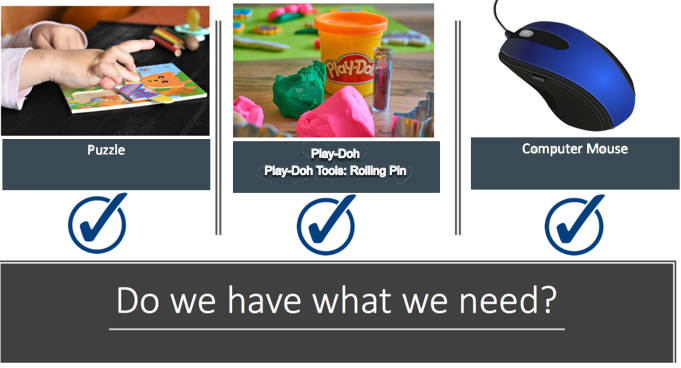
 
image.png
 
 
Step 3: Use a visual schedule with the student on PowerPoint so they can cross off as an item is completed.
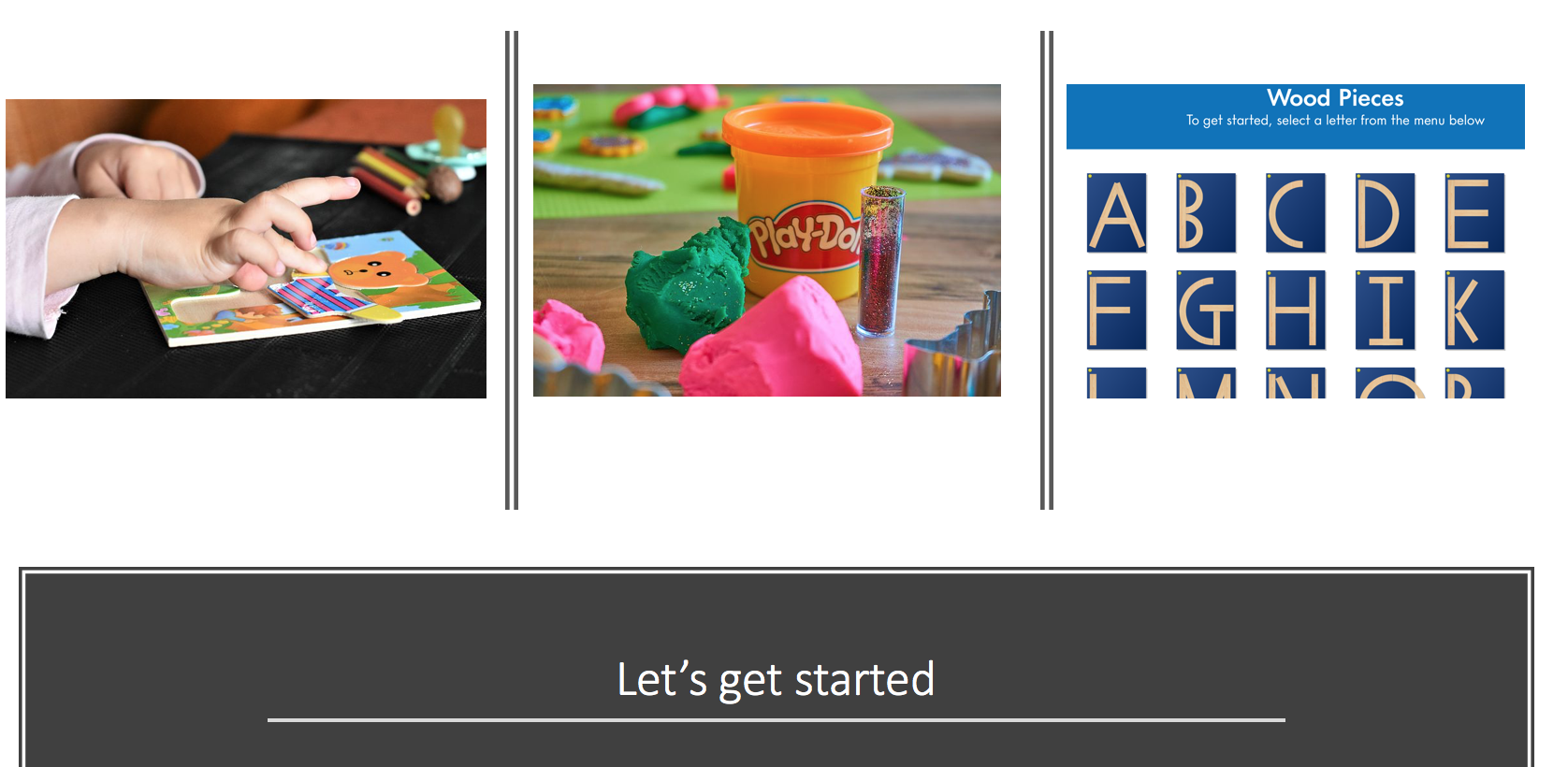
 
image.png
 

2) What is the typical length of a session?

It depends on the age of the child and if there is a facilitator present.  Typically, I do 30-minute sessions.
 
3)How much do the parents need to help during these sessions?
 
It depends on the child's age and attention. However, after a few sessions, a routine is often established and this tends to decrease the need for a facilitator.  It is important and helpful to have a routine or schedule with the session and use a 2:1 ratio. You work on 2 easier or preferred tasks for every non- preferred activity.
 
 
For more information on the topic of "Telehealth in Pediatrics", please check out the OT Virtual Cafe chat.


aditi mehra

Aditi Mehra, DHSc, OTR/L

Dr. Aditi Mehra is a pediatric occupational therapist with over 25 years of experience across school, clinical, and educational settings. She holds a Bachelorʼs degree in Occupational Therapy from Western Michigan University and a Doctorate in Health Sciences from Midwestern University. During her doctoral studies, she also completed certification training in Behavior Analysis to further deepen her understanding of learning and behavior.

Dr. Mehra is the Director of the Chicago Fit Learning lab, where she integrates Precision Teaching and data-driven learning methodologies to support academic and developmental growth. She is also an Adjunct Professor at Lewis University and develops continuing education trainings for therapists and educators, with a focus on neurodiversity, learning, and AI-supported educational practices.

In addition to her clinical and educational work, Dr. Mehra is currently preparing her first published continuing education presentation and educational resources focused on innovative, evidence-based approaches in therapy and learning. 


Related Courses

Pediatric Interventions For Hypoxic Ischemic Encephalopathy (HIE)
Presented by Aditi Mehra, DHSc, OTR/L
Video

Presenter

Aditi Mehra, DHSc, OTR/L
Course: #6571Level: Intermediate1 Hour
  'I am happy my alma mater was represented'   Read Reviews
The course aims to help practitioners improve their understanding of the complexities of hypoxic ischemic encephalopathy (HIE) and compare evidence-based intervention strategies for treating global developmental delays with a real-life perspective from a parent.

Trauma Informed Care: What Does An Occupational Therapy Practitioner Need To Know?
Presented by Aditi Mehra, DHSc, OTR/L
Text

Presenter

Aditi Mehra, DHSc, OTR/L
Course: #6110Level: Introductory1 Hour
  'Great Course'   Read Reviews
The significance of recognizing and addressing the complex impacts of trauma on both clients and practitioners, to not only tailor interventions that foster holistic healing and growth but also empower us to forge deeper therapeutic connections, will be explored in this course. This content will help you learn how to use evidence-based strategies rooted in trauma-informed principles to extend compassionate support to those we serve and cultivate an empathetic foundation to navigate our own personal and professional experiences of trauma.

Joint Attention Based Interventions For Preschoolers With ASD
Presented by Aditi Mehra, DHSc, OTR/L
Video

Presenter

Aditi Mehra, DHSc, OTR/L
Course: #6133Level: Introductory1 Hour
  'As an OT with over 20 years of experience serving children with ASD and other conditions that impact joint attention this class was refreshing, and had real take away actions to implement in my practice right away! I appreciate that the presenter used EBP and provided so many great strategies to incorporate in my sessions'   Read Reviews
The critical role of joint attention in the development of preschoolers with Autism Spectrum Disorder (ASD) will be addressed in this course. Joint attention, the ability to share attention and engage with others in a meaningful way, is a foundational skill for social and communication development. For children with ASD, deficits in joint attention can limit progress in areas of play, learning, fine motor development, and participation overall. This course equips clinicians with easy-to-implement, take-home, evidence-based intervention strategies to enhance joint attention skills in preschoolers with autism, providing a holistic purview to improve clinical outcomes.

Social Stories For Occupational Therapy Practitioners
Presented by Aditi Mehra, DHSc, OTR/L
Video

Presenter

Aditi Mehra, DHSc, OTR/L
Course: #6942Level: Introductory2 Hours
  'There were a lot of examples on why this tool works, but also explained why it also doesn't work with other situations/clients'   Read Reviews
This session introduces occupational therapy practitioners to the core principles and structure of Social Stories™ based on Gray’s framework. Participants will review current evidence on their effectiveness, limitations, and factors that influence outcomes. We will highlight when Social Stories are most useful—such as for social behaviors, transitions, and self-regulation—and when other strategies may be more appropriate. Attendees will learn a clear step-by-step process for developing individualized stories and see how they can be paired with modeling, visual supports, and prompting to support generalization. The session concludes with a brief look at emerging digital and AI-enhanced social narrative tools shaping future OT practice.

How To Fix Common Handwriting Challenges In Pediatric Therapy
Presented by Aditi Mehra, DHSc, OTR/L
Video

Presenter

Aditi Mehra, DHSc, OTR/L
Course: #5157Level: Intermediate1 Hour
  'Great instruction, easy to understand and apply on the job'   Read Reviews
This course addresses the myriad of underlying issues which can impact handwriting performance, from the basics of pencil grip, letter formation, pace, and the sensory-motor mechanics required for handwriting success. Upon the completion of this course, practitioners will have access to simple step by step strategies with worksheets they can use the very next day to implement fluency-based handwriting interventions and make data based decisions in everyday practice.