Editor's note: This text-based course is a transcript of the webinar, Feeding Interventions With Allergy Considerations, presented by Kristen Tompkins, OTR/L.
*Please also use the handout with this text course to supplement the material.
Learning Outcomes
- After this course, participants will be able to recognize common signs that may indicate a student has allergies, even in the absence of related medical information or allergy testing.
- After this course, participants will be able to identify foods that could be problematic for students with allergies due to higher mold content and/or histamine levels.
- After this course, participants will be able to explain to a parent or teacher what types of foods would be a good starting point for systematic desensitization with a child, and when assessment evidence indicates allergies could be a concern.
Introduction
Thank you so much for joining this webinar today. I want to start by saying that this is not a topic based on anything I learned specifically in occupational therapy school, and it is not a perspective I have ever heard covered in continuing education courses on feeding interventions. It is, however, my personal lifelong story, and we will be delving into more detail on that later in the presentation.
Our session today offers a unique look at the treatment of feeding disorders with a particular focus on the impact of allergies on children who might be labeled as picky eaters or as having sensory defensiveness. We will focus on several key learning outcomes. I want you to be able to recognize common signs that might indicate a child or client has allergies, even in the absence of medical information or allergy testing. Another significant component involves identifying foods that may be problematic for clients with allergies due to higher mold levels or histamine content. Finally, I want you to feel confident explaining to a parent, teacher, or caregiver which types of foods might be a good starting point for systematic desensitization when assessment evidence indicates allergies could be a concern, even without clear medical evidence.
Analogy: Car Accident
We are going to start the presentation with an analogy related to therapeutic interventions. To begin, consider this story. A mother suddenly turned the steering wheel, swerving off the road and through a telephone pole. I want you to think for a minute about what you think happened and how it could have been prevented. As therapists, we are problem solvers. For occupational therapy practitioners (OTPs), a major part of our profession is being task analysts; for speech therapists and physical therapists as well, we are all problem solvers when working with our clients. What I want to pull from this analogy is the question of whether we are making decisions with all of the facts, or at least with as many facts as we are able to gather.
In this particular story, what actually happened is that a little boy fell asleep in the front seat and fell heavily on his mother's arm as she was driving, causing her to swerve off the road. This is a true story from the 1970s involving me, my mother, and my little brother. This was a time when we did not have seatbelt laws, and my toddler brother was riding in the front seat. Without this specific information, someone might make general suggestions to prevent swerving off the road, such as not driving while distracted or overtired. While those might be sound suggestions for avoiding certain types of car accidents, they would not have a positive impact in this scenario because they are not based on the actual facts of the situation. We must have the facts to come to the most beneficial conclusion.
Therapists = Problem Solvers/Task Analysts
This is exactly what happens sometimes when therapists make sensory-based or behavior-based treatment decisions for what we might call picky eaters who, in fact, may have allergy issues that are driving their food choices and preferences.
Current Statistics on Increasing Allergy Issues in Children
The current statistics on increasing allergy issues in children from the CDC indicate that food allergies are a growing concern for food safety and public health. It is estimated that one in thirteen children, or approximately eight percent of the population, is affected by food allergies, which averages out to about two students per classroom. There are eight food groups that account for the most serious allergic reactions in the United States. These groups include milk, eggs, fish, crustacean shellfish, wheat, soy, peanuts, and tree nuts. The symptoms and severity of allergic reactions differ between individuals, and they can change for one person over time, either increasing or decreasing in intensity. It is important to remember that not all allergic reactions will result in anaphylaxis.
Research: Infant Feeding Food Allergy Prevention Guidelines
A systematic review of infant feeding and food allergy prevention guidelines published in the World Allergy Organization Journal highlights the current state of our professional resources. Researchers in Australia conducted this review to identify guidelines for preventing food allergies for use by health professionals. They used the Appraisal of Guidelines for Research and Evaluation (AGREE II) to assess guideline quality. They identified considerable room for improvement in developing guidelines and advice documents for food allergy prevention. It is clear that we still have a long way to go to provide resources that are truly helpful to healthcare providers in this area.
American Academy of Allergy, Asthma, & Immunology Definitions
Before we proceed with our discussion of allergies, it is helpful to review a few basic definitions from the American Academy of Allergy, Asthma, and Immunology. Histamine is a chemical released by mast cells into the immune system when the body encounters an allergen, triggering an allergic reaction. An allergic reaction occurs specifically when the immune system overreacts to a harmless substance known as an allergen. In some individuals, substances such as pollen, certain foods, latex, mold, pet dander, dust mites, or insect stings act as allergens, triggering the production of antibodies called immunoglobulin E. This immunoglobulin E travels to cells that release chemicals, including histamine, causing symptoms most often in the nose, lungs, throat, sinuses, ears, the stomach lining, or the skin. Those are the fundamental basics of the process.
Analogy: Histamine Cup
I have one more analogy to share that was presented to me during my own experience with allergy testing. The nurse working with me suggested that it is helpful to think of our bodies as having a histamine cup. Everyone has a histamine cup, and it can fill up over time. We want to look at how that might increase an allergic response.
With mild allergen exposure, we see just a little activation at the bottom of the cup. There isn't much going on. It might be something that creates just a slight sniffle, a watery eye, or a bit of an itch, but you may not really experience much at all with just this mild exposure. However, if exposure continues to increase, our histamine response increases, and the cup fills up.
If that continues, we reach a full cup allergen exposure. I tend to think of this as a red alert mode. As a child who grew up with Star Trek, I remember that when an impending battle loomed, the ship would be put on red alert, with sirens blaring. When there is no more room in the cup, if the allergen exposure continues or is added to, the cup can overflow. You are then faced with a more severe allergic reaction that could result in anaphylaxis. It does not always happen, but it certainly could.
With this in mind, I want you to be aware that, for someone with allergies, you cannot precisely predict what might trigger a reaction or its severity. This becomes particularly important to consider for someone with multiple allergies. That person may only be mildly or moderately allergic to certain things, but there can be a cumulative risk. All allergens increase histamine response and fill the cup. This includes foods and the accumulation of environmental allergens, such as pollen, pet dander, and airborne chemicals. This was a real battle I faced frequently in school settings with items like perfumes, room sprays, scented candles, lotions, hand sanitizers, and various hygiene products. If you have chemical sensitivities in addition to other types of sensitivities, those factors just keep adding to the cup.
Case Study 1-Self
Figure 1 shows me in May of 2020.
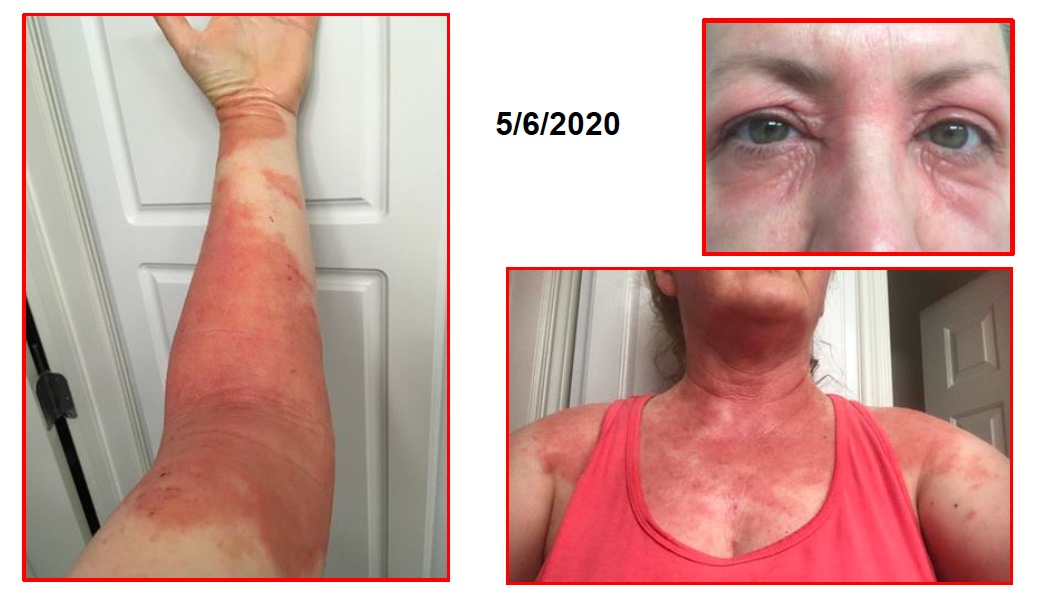
Figure 1. Images of the author showing an allergic reaction.
You can see that I am currently having a broad reaction. My skin is terribly inflamed, and I experience a tremendous amount of swelling and edema around my eyes. My skin goes through phases, almost like a lizard shedding its skin, where the inflammation and edema settle down, and the skin begins to peel. Sometimes this is a sign that I have turned a corner in a positive direction, but other times it is a false sense of recovery before the cycle starts all over again. This is what it can look like at its worst when my histamine cup is completely full.
Looking back at my history through infancy, childhood, and into adulthood, I have a long record of eczema, stomach aches, gastrointestinal issues, and mild headaches. As a toddler, the doctor told my mother that I was the baby who was allergic to everything. I had a tremendous number of food issues and was definitely considered a picky eater. I had a very strong dislike of leftovers. Freshly made food versus day-old food tasted so different to me that I was more willing to take a consequence for not eating a leftover supper than I was to try to eat it. I also hated potlucks as a child.
In my early adulthood, I had a desire to learn to eat other foods and convinced myself it was a matter of mind over matter. I am sure people in my childhood said I was just a picky eater, and as an adult, I did not want that label. I wanted to eat all the wonderful things I saw others enjoying, so I performed a lot of personal desensitization work. I self-trained to eat previously non-preferred foods, such as asparagus or avocado, through systematic desensitization. However, I later figured out that this was actually overriding my healthy nervous system response. If I had been assessed as a child by an occupational therapist, they might have concluded that I had sensory defensiveness to smells or textures, but that would have been a false conclusion. In reality, my system was telling me those foods were not safe for me to consume because of my allergy issues.
When I turned forty, I decided to have allergy testing. I knew I had some chemical issues, but could not pinpoint them. At that time, the only environmental allergen I knew for certain I was allergic to was feathers, which was a big issue when I was a kid sleeping on an old country feather bed. My mother always suspected I had a mold issue, but I never had the testing to prove it. I eventually had a full panel of environmental pinprick testing and later a patch test for chemicals on my back.
The day I went in for the pinprick testing for mold, grasses, and pine, I actually went into anaphylaxis. I did not know that was happening, as I had never experienced it before. Because I did not know I needed one, I was not a person who carried an epinephrine auto-injector. The testing created a perfect storm. As the reaction increased, the staff first thought I was nervous about needles and encouraged deep breathing to calm down. When that did not help, they gave me Benadryl. The redness, swelling, itching, and heat continued to rise up my neck, so they gave me a Kenalog shot. My condition worsened, and I became dizzy. They had me lie on the floor with my feet up, asking if my tongue or throat felt different. At that point, they were fine, but I felt odd and hot.
As they moved me across the hallway to a medical reclining chair, I had to hold onto the wall because I was so unstable. I told them my throat was changing, and my voice sounded like I had inhaled helium from a balloon. They got me to the chair and administered the epinephrine, which thankfully settled the reaction. I saw a physician in the corner with a sizable needle, which I later learned was a tracheostomy needle intended for my throat if the medication failed. I focused on my breathing and a square on the floor, determined not to need that needle.
It turns out that I am actually allergic to Benadryl and Kenalog, which is why the initial treatments failed and likely worsened the reaction. I am that person who probably should live in a plastic bubble because I am allergic to almost everything. This makes life more complicated, but I now have better success controlling outbreaks because I know more about how to manage my environment. I tell you this story to illustrate that allergies are a complex issue. While some people have quick, severe reactions to specific items like peanuts, others experience cumulative effects from many different triggers that eventually overflow the histamine cup.
The primary takeaway is that just because someone may not have specifically identified food allergies does not mean they do not have allergy issues related to food. Mold allergies and high-histamine foods must be a consideration in feeding interventions for students with known or suspected allergies.
Research: Alterations in Child Feeding Behavior
Let's touch on a little more research regarding alterations in child feeding behavior as an underrecognized clinical complication of food allergy. This information comes from the Journal of Allergy and Clinical Immunology in Practice. Researchers in the United States conducted a study comparing children with parent-reported food allergies or pediatric feeding disorders against healthy children to investigate feeding problems. The results indicated that children with food allergies exhibited significantly higher feeding problems compared with healthy children. This suggests that what we often observe as behavioral resistance to feeding may actually be a clinical complication directly tied to the child's allergic profile.
Case Study 2- Sarah
Case study two is Sarah. Sarah demonstrated tremendous colic as a baby, and somewhere in her early toddler years, it was determined that she had a severe peanut allergy. Sarah is a girl after my own heart, as her sense of smell is extremely heightened. Her behavior was often labeled as pickiness because people assumed that if peanuts were not involved, there was no reason for her to refuse certain foods. This was very evident at potlucks and restaurants. Blood work and allergy testing in her childhood confirmed allergies to peanuts and other nuts. Her doctor noted that while she may not have an allergy to almonds, she must avoid tree nuts in general because they are often processed with peanuts. Testing also showed she is allergic to soy, pheasants, and ragweed.
An interesting point regarding her ragweed allergy is that ragweed is related to watermelon. If she eats watermelon, her tongue starts to tingle. This happens because when you have an allergy to a specific substance, your body might register a related or similar substance as the allergen itself.
I experience this issue with a chemical called balsam of Peru, which is harvested from bark. Because balsam of Peru is in so many items, including sodas, soaps, and detergents, I have to be very careful. Since it is a bark-based chemical, if I consume other bark-based products like cinnamon, my body might mistake it for balsam of Peru. Sarah must be equally cautious with related substances because of her ragweed allergy.
Research: Feeding Difficulties in Children With Food Allergies
Let's touch on a little more research regarding feeding difficulties in children with food allergies from an EAACI Task Force report. EAACI stands for the European Academy of Allergy and Clinical Immunology. This was published in the Journal of Allergy and Clinical Immunology and Practice. The researchers were from around the world, including Brazil, France, Germany, the United Kingdom, and the United States. They conducted a systematic review of all available literature from eight international electronic databases. It was a very thorough review reporting the prevalence of feeding difficulties among children with known food allergies. The results indicated that feeding difficulties are common in food-allergic children, particularly those with multiple food allergies. Given the increasing prevalence of food allergies, this highlights the need for consensus-based definitions and diagnostic tools for feeding difficulties in food allergy to ensure early recognition and optimal management by multidisciplinary teams.
Case Study 3 -Aidan
Our third case study involves Aiden. Aiden began demonstrating frequent vomiting at school, which occurred quite often in the classroom. Initially, both his teacher and his parents thought it might be an attention-seeking behavior. Aiden had diagnoses that included autism spectrum disorder and intellectual disability, and he was nonverbal. Although he was nonverbal, he was masterful at gesturing to make his point.
The teacher was wonderful at collecting data, and the theory of attention-seeking behavior simply wasn't panning out. Based on my own observations, it did not seem to be driven by that at all. We then considered whether the behavior was sensory-based, but I did not see evidence of that in his patterns of action. It reached a point where they just had to keep a trash can by his desk because they could not figure out how to address the issue. Eventually, Aiden had allergy testing, and it was determined that he had an allergy to sesame seeds. These regularly occurred on the hamburger buns, which were a frequently chosen item on the school lunch menu. Once the sesame seeds were identified and removed from his school diet, the vomiting issue resolved. This is another example of how we might jump to conclusions about behavior or sensory needs when what is actually driving the behavior is an allergy.
Research: Feeding Characteristics in Children With Food Allergies
Let's look at another study on feeding characteristics in children with food allergies. This scoping review in the Journal of Speech, Language, and Hearing Research was conducted by Australian researchers who synthesized current evidence on the feeding characteristics of children with food allergies. The results indicated that children with food allergies or a history of food allergies may present with a range of characteristics that map across the feeding skill and psychosocial domains of pediatric feeding disorders. These characteristics can include food refusal or aversion, anxiety with eating, poor intake, slow eating, an immature diet, and delays in oral sensory-motor skills. It really hits on the fact that all of those issues are things you might see with children who have food allergies or a history of food allergies.
Role of Therapist
I want to dive into what we should consider as the role of a therapist when working with a client who we either know has medical allergy issues, or we suspect might have them. Before assuming that picky eating is a sensory or behavior-based issue, it is vital to check with the family or the client to see if there are any known food or environmental allergies. I primarily work as a school-based therapist, so I often use the word child, but these considerations apply to adults with feeding issues as well.
Another role we have is to monitor for signs of allergies during assessment and to interview the caregiver about such symptoms. Even if there is no medical diagnosis, look for indicators such as rashes, eczema, a frequent runny nose, itchy or watery eyes, headaches, stomach aches, vomiting, or diarrhea. Food allergies often cause gastrointestinal symptoms. In my own experience, I realized that if I consume something problematic, I get a mild headache within fifteen minutes. I lived with this for so long that I thought it was normal, but after an elimination diet, I recognized it as a specific headband headache. If I continue to consume the problematic item, I then experience gastrointestinal distress and eventually skin outbreaks. Having this information helps determine if allergies are a factor for your client.
When signs are apparent or when sensory and behavioral interventions have not proven effective, it is time to discuss the possibility of allergies with parents or caregivers so they can pursue medical consultation with a pediatrician. If there are no known allergies, but there are indications, you can assist families or teachers in being detectives. Using a food diary or journal is an excellent way to start identifying what dietary triggers might be driving the pickiness.
We also have a role in educating families and teachers on the complexity of allergies in picky eaters. We can help develop a reasonable list of foods to work toward that are not contraindicated by known allergies. You do not want to choose high-histamine foods, even if they have not been specifically identified as an allergen for that student. Likewise, if there is a known allergy to mold, we must be able to explain how that complexity relates to food choices, which we will cover in more detail now.
Examples of High Histamine Foods
According to the chronic fatigue clinic at Johns Hopkins, certain foods are either high in histamine themselves or trigger histamine release in the body. I find it fascinating because many of these are items we typically view as healthy, nutrient-dense options. Parents often hope their children will learn to eat these specific foods, yet they can be significant offenders for someone with allergy concerns.
The list of high-histamine foods includes fruits like avocado, kiwi, pineapple, papaya, strawberries, passion fruit, plums, bananas, citrus, and dried fruits. It also features vegetables such as eggplant, spinach, squash, and tomatoes. Even if these are not identified as specific allergens for a client, they are naturally high in histamine and can contribute to filling that histamine cup.
Other problematic items include peanuts, walnuts, cashews, and especially aged cheeses like Parmesan, blue cheese, and brie. Processed meats are particularly concerning, including deli meats and hot dogs, which are incredibly common in school lunches. Canned meats, fish such as tuna, shellfish, beans, chickpeas, and soybeans also fall into this category. You can start to see a pattern here where aged, processed, or canned items are frequently associated with higher histamine levels.
Pickled or vinegar-containing foods like pickles, olives, mustard, and ketchup are on the list, as are fermented foods. This is particularly interesting because of current dietary trends focused on gut health. While foods like kimchi, sauerkraut, and yogurt are often recommended to support healthy gut bacteria, they can actually increase histamine response in people with allergy issues. We must be careful not to apply a one-size-fits-all approach to these health trends.
Additional high-histamine sources include sour milk products like sour cream or buttermilk, as well as soy products such as soy sauce and soy lecithin, which is often hidden in many processed items. Spices such as cinnamon, allspice, chili powder, cloves, and curry powder are also included, along with flavored milks and products containing artificial colors or flavorings. Finally, a major factor is leftover food that has not been frozen. As I mentioned in my personal history, I had a significant aversion to leftovers because they tasted so different to me. The reality is that histamine levels increase in food over time unless it is frozen.
Recommended Foods to Avoid for Mold-free/Yeast-free Diet
After my allergy testing, when the medical team saw the extent of my mold sensitivity, one of the takeaways they gave me was to follow a mold- and yeast-free diet. This was a concept I had never heard of before. While they did not initially mention high-histamine foods, the mold-free and yeast-free guidelines provided a starting point. There is significant overlap with the high histamine list, but there are important additions to consider.
Foods containing yeast extract, such as stock cubes or packaged soups, are primary concerns, and you really have to read the labels carefully. Raised doughs, including breads, buns, crackers, and muffins, are also problematic. This extends to fermented drinks, sauces, and vinegars, following that same pattern we saw with histamines. Pickled and smoked meats and fish, including many processed delicatessen foods, should be avoided. Hard cheeses are another issue because the harder the cheese, the moldier it is. For example, I might be able to eat a small amount of fresh mozzarella because it is not aged, but I cannot even be in the same room as blue cheese.
Mushrooms are another major offender. When I saw them on the list, it made perfect sense. As a child, I was the kid who could find the tiniest piece of mushroom in spaghetti sauce or on a pizza. I always described eating them as eating rubber dirt and could not understand why anyone would want to consume them. I now realize that was my system providing a healthy response to something I should not be eating. Nuts, especially peanuts and pistachios, tend to have higher levels of mold. Dried fruits, sour cream, and sour milk are also concerns. Sugar-based products like jams and jellies are particularly vulnerable to mold colonization. Juices are typically made with overly ripe fruit, which my allergist warned me about. This applies to canned vegetables as well because canned tomatoes, for instance, are often made from very overripe fruit.
A general rule to remember is that the riper a food is, the higher its mold content is. Additionally, foods with more crevices have higher mold content. Consider strawberries, raspberries, blueberries, or asparagus. These are items that wilt or mold very quickly after you bring them home. I do not even eat them on day one because they already have a higher mold content. Those tiny crevices are places for bacteria and mold to gather. Broccoli and asparagus are similar in that regard. Even with something like a cantaloupe, the skin has many crevices. When you cut through it, you cause cross-contamination, and you cannot simply wash the mold off. For someone with a mold allergy, the safest path is to avoid those foods entirely.
Mold-free/Yeast-free Diet Recommendations
Here are some tips from that same Australian resource for avoiding mold. You should eat only freshly opened food and peel all root vegetables and fresh fruit before eating them. Check food for signs of mold before consumption. If there are signs of mold, a person with a mold allergy should not eat it. Most people can handle a certain level of mold just fine, but we are specifically talking about individuals with a sensitivity. These steps can help lessen their allergic responses. Washing mold off is not sufficient, nor is cutting it off. For cheeses, you must always check for signs of mold. Even if mold is not used in cheese production, simply cutting out the moldy section is inadequate, as mold filaments and growth can still be present. You should avoid eating home-cooked foods that have been refrigerated for more than 48 hours. Personally, and for what I recommend to families of children with a determined mold allergy, I recommend freezing leftovers the same day they are cooked. As long as you freeze the food, you are stopping the mold growth. You can then reheat it later, and it will be perfectly fine. This is how I navigate my own life. If I want to cook larger batches of something, I freeze all the portions I plan to use later. You must discard any food that is obviously spoiled by mold, especially overripe melons and other fruits. It is best to buy meat or fish daily, if possible, and eat it within 24 hours or freeze it immediately. That freezing component is incredibly helpful. Finally, people with a mold issue should not smell food to see if it is spoiled, as inhaling mold spores can trigger an allergic reaction.
Research: Empowering Children and Families with Food Allergies
I want to touch on a bit more research titled Empowering Children and Families with Food Allergy: An Innovative Role for Occupational Therapy. This was from the Open Journal of Occupational Therapy, and while I realize I am speaking to a speech audience, it is still beneficial to review broader research related to feeding issues and allergies. The researchers for this study were from the United States and examined the impacts of food allergies on home, school, and community involvement among children and their families. The results indicated that parents perceive food allergies as a significant barrier to several aspects of daily life. Furthermore, both parents and healthcare providers recognized the need for additional supports for families of children with food allergies. Suggestions were offered for an expanded therapy role to support participation in daily activities while managing or limiting exposure to food allergens.
I believe that because both occupational therapy and speech therapy are professions that tend to work with children having feeding issues, we should be armed with information related to high-histamine foods and the mold component of certain foods. If you encounter someone where this is an issue, one way you can support the family is by helping to give them solid tips for how they might manage things at home. Reducing that histamine impact for the child could then lead to fewer feeding issues.
General Feeding Intervention Considerations
I want to touch on some general considerations for feeding interventions for those who may not have extensive experience in this area. First and foremost, force-feeding is never productive. We want to find ways to give the child some control. In my practice, this often looks like taking turns so the interaction is a mutual engagement rather than me simply trying to get them to do something. Giving them an out is another effective way to provide control. This might involve using a spit cup so the child can practice letting a food item touch their tongue or lips, or even biting off a piece, without the pressure of having to consume it. We are working toward tolerance, but they must know they have an exit strategy.
I cannot emphasize the importance of play enough, as it is the greatest distractor we have. You also want to strategically plan your intervention times. Do not schedule a session directly after a tube feeding or when a child has low blood sugar and is cranky. Regular snack and lunch times may or may not be the best environment. For example, as someone with a mold issue and a heightened sensitivity to smell, going into a school cafeteria at lunchtime is a huge challenge that makes me feel sick to my stomach. If I have a student with similar sensitivities, whether they are allergy-related or purely sensory, I know the cafeteria is not the right place to work. I need a much more controlled environment to help that child build comfort and tolerance.
It is also essential to work with parents, teachers, and the IEP team to develop reasonable feeding goals and benchmarks. Expecting a child to eat certain foods might be an overly lofty goal initially. A more realistic starting point might be playing with food, smelling it, or simply allowing it to touch their lips.
Systemic Desensitization
Regarding systematic desensitization, which I used on myself to increase my ability to tolerate things, it definitely has its place when applied correctly. If you are working with a child who has allergies, you should consult the high-histamine and mold food lists first. Identifying foods that are not problematic will provide the best starting point for your desensitization work. For other children where these specific allergies are not a factor, you might simply start by having them tolerate non-preferred foods in the room or on the table in their workspace.
In a classroom or home setting, you can start by having the child tolerate nonpreferred foods in their workspace. For example, while they work, they might have small pieces of apple, cheese crisps, or carrot sticks on the table. The goal is to build tolerance for simply having the item in their space without it being pushed away.
The importance of play cannot be overstated when working on feeding. You can pair food activities with highly preferred play tasks. If a child loves trains or trucks, you might load the cars or the back of a pickup truck with different food items. You could have them feed toy characters, a puppet, or a baby doll. Another idea is to incorporate intermittent touch, smell, or taste during a game like freeze dance. When the music stops and everyone freezes, the child might touch a carrot stick to their cheek or lips. You can use food to construct funny faces, build houses, or even use items as painting utensils. These playful interactions build trust with food items the child would otherwise avoid.
Board games are another useful tool. You can adapt a standard game like Chutes and Ladders by adding custom spaces or rules. For instance, if a child lands on a certain spot or rolls a specific side of a die, the task might be to touch a carrot to their cheek or lips to move forward five spaces.
Before moving to tasting, you may need to focus on desensitizing the sense of smell. If a sensitivity is allergy-related, remember that the child's system is providing a healthy warning. In those cases, work from the high-histamine or mold-free and yeast-free lists to choose nonproblematic foods. For children without those specific allergy concerns, you can create games around smelling to build tolerance. This might include intervals of smelling during play, such as stopping a train on its track to smell cinnamon. With older children, a blindfolded smell guessing game is often a hit. You can start by introducing scents like vanilla extract, cinnamon sticks, mint leaves, or orange wedges, and then have the children take turns guessing the scent while blindfolded.
Systematic desensitization also involves working from distal to proximal. If a child has a knee-jerk reaction and pushes a spoon away, I might start a playful game with a dry spoon. I begin by intermittently tapping the spoon on their hand, gradually moving it up their arm to their cheek. Once they are comfortable, I might wet the back of the spoon with water and repeat the process. By being playful and moving slowly while the child is engaged in another activity, you build tolerance and show them you are not going to push them into an uncomfortable situation.
Finally, consider novel ways to taste, eat, or drink. Using a dropper or a plastic medicine syringe can help a child overcome negative associations with a standard cup. Textured spoons, vibrating oral tools, or chewable items that mimic food can also be helpful. For a child who loves Oreos, you might find a chewable that looks like one and gradually add new flavors or textures to it to expand their tolerance.
Prep Work
You might also need to do some prep work to address specific physical needs. This can involve increasing oral tone or awareness, as well as working on tongue lateralization or retraction. Tools like cold, vibration, or sour flavors can be useful, along with a nuke brush or a toothbrush. You might also include active movement tasks to temporarily bump up muscle tone. This is especially important for children with lower facial tone who may keep their mouths slightly open. It is key to remember that muscle tone has nothing to do with strength; it is the state of your muscle at rest. Muscle tone is increased by active movement.
I find that a therapy ball can be incredibly effective for these children. I worked with a child in early childhood who drooled profusely, and the primary intervention was having him sit on a therapy ball every day during circle time. Because you have to make constant postural corrections to stay upright on the ball, the active shifting and bouncing helped bump up his muscle tone. This eventually affected his facial and tongue muscle tone, helping him gain control over his drooling. This can be a very good intervention for children with lower tone who struggle with oral control.
Other prep work might involve decreasing oral tone for children who experience tightness. This could include passive cheek or lip stretches before beginning any feeding work. You might also need to do work to build chewing skills, such as vertical or rotary chewing and keeping the mouth closed while chewing. I have had success using items that are somewhat stale, such as stale licorice or stale gummy worms, which allow a child to chew without biting off a piece. You can also strategically place food items on the molars or use cheesecloth pouches so the child can chew without chunks coming off that they cannot yet handle. Using a small mirror can also provide helpful feedback during these tasks.
Special Considerations
I want to finish by sharing two special considerations. First, when working with children who have significant trunk control issues, such as those with cerebral palsy, focus should first be given to helping them achieve a tall or upright body position if possible. If they cannot achieve this independently, it is essential to work with a physical or occupational therapist to determine the best mechanical supports to help them do so. I have worked with some children who can learn to maintain this position, but they simply had not spent much time being taught what that posture means, feels like, or looks like. Proper posture is vital for a safe swallow and improved motor control.
The second consideration is that, for children with feeding orders, we must follow them exactly as written. I had a boss who once pointed out that while a family might choose to send steak and eggs to school in a child's backpack, we are not feeding it to them if that is not what the doctor’s order specifies. We must be very careful to adhere to the medical orders and seek updated orders as appropriate before making any changes to the consistency or type of food provided.
Questions and Answers
If a child dislikes certain food smells but isn't known to be allergic, should they still be tested for allergies?
Not necessarily. While smell sensitivity can exist independently of allergies, you should act as a "detective." Look for physical indicators like eczema, watery/itchy eyes, or a chronic runny nose. If these signs are present, have a conversation with the parents about tracking the child's diet to see if certain foods correlate with these symptoms.
Should toddlers (ages 1–3) who are picky eaters see an allergist, since they can't communicate why they are refusing food?
It can be difficult because physicians are often reluctant to put very young children through uncomfortable or painful allergy testing. Instead, monitor the child for obvious physical signs (like severe eczema). If you suspect an allergy but lack a formal diagnosis, the best approach is to be extra cautious with the specific foods you choose to introduce or work on.
Do you need to avoid all high-mold foods if you have a mold allergy?
It often requires trial and error. Not all foods have the same mold content, and reactions can be cumulative. Think of it as a "histamine cup"—various factors (environment, different foods) fill the cup over time. Even a low-mold food might trigger a reaction if the child's "cup" is already nearly full due to other triggers.
What is a common "hidden" trigger for mold allergies when eating out?
Old cooking oil. Many restaurants do not change their frying oil frequently. As oil ages, it can trigger reactions in people with mold sensitivities. This is a helpful tip to share with parents who notice their children having reactions only when eating away from home.
Summary
Thank you for your time. I want to share one final update. A few months ago, the list of major food allergens was expanded to include a ninth group: sesame. This is very important information to have as we examine how different foods affect our clients.
References
See additional handout.
Citation
Tompkins, K. (2026). Feeding interventions with allergy considerations. OccupationalTherapy.com, Article 5860. Retrieved from https://OccupationalTherapy.com