
OccupationalTherapy.com Phone: 866-782-9924


The Reflective OT: Looking Within to Improve Clinical Practice

The Reflective OT: Looking Within to Improve Clinical Practice
Nicole Quint, PhD, Dr. OT, OTR/L
June 2, 2016
Share:

Why Reflect as an OT?

Reflective practice involves the practitioner in a continuous internal dialogue in which the relationship between the professional self and the personal self is kept alive and thought about.

Le Riche (1998, p.34)

Le Riche talks about taking a little bit of time to stop thinking only about your clients and everything that you have to do within your role, and think about yourself. Sometimes as OTs we are not so good about that. We can be servants to our profession. We serve others. We take care of other people. We tend to put others before ourselves. Some of this might be a little challenging to you, but I am going to ask you to stop and think about yourselves, and put yourselves first. Why would we do this? What's the point? 

Epstein, et al.

Epstein, et al. has done some research on this. According to him, the key to reflection and why we want to do it, is because it invites doubt and ambiguity, which creates an open mind. As a therapist, we want to make sure that we do not get stuck in some of our linear thinking. We want to expand our horizons and stay fresh. He also found that critical self-reflection is at the heart of effective clinical work. I know that everyone here, and every OT that I meet, has the goal to always be effective in our clinical practice. This is a really important piece of that puzzle.

Knight

Knight also found that it is important to respect the emotional toll and prevent burnout. I am going to ask a little personal question here. How many of you have ever felt, I am not going to say "burned out", but felt that you were starting to get a little exhausted emotionally. It looks like almost everybody in the audience raised their hand. Sometimes we cannot effect change with some of the emotional issues at work regarding what kind of clients you get, what kind of administrators you work for, or what kind of paperwork you have to do. But this can serve as an inoculation towards that. If you use reflective practice it can help prevent some of that burnout that you do not have any control over.

Dawson

Dawson also found that reflective questions do not need to have one correct answer. They just simply disrupt common ways of thinking. Reflective thinking facilitates your perspective to be fresh. You can look at the situation with a fresh sense, and I think you can see how that would decrease some of that frustration that we can experience as a healthcare provider.
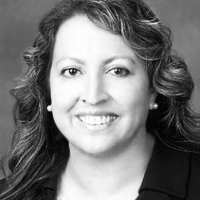

nicole quint

Nicole Quint, PhD, Dr. OT, OTR/L

Nicole Quint, PhD, Dr.OT, OTR/L, is a licensed occupational therapist with more than 20 years of experience in pediatric practice, specializing in sensory processing, executive functioning skills, behavioral strategies, and social-emotional learning to optimize occupational participation and performance. She is a professor and program director for the post-professional DrOT and dual degree DrOT/PhD at Nova Southeastern University. She serves as an international continuing education provider for CAOT, PESI, and OccupationalTherapy.com and has presented at AOTA, CAOT, FOTA, and SoPAC (Section on Pediatrics Annual Conference). She served as the Southeast Regional Coordinator for the SP3D assessment tool data collection process with STAR Institute and WPS (Western Psychological Services).


Related Courses

Social Emotional Learning: An Occupation-Centered Approach To Self-Regulation
Presented by Nicole Quint, PhD, Dr. OT, OTR/L
Video
Course: #6201Level: Intermediate2 Hours
The role of social-emotional learning as a means of facilitating the development of self-regulation in children will be discussed in this course. Using an occupation-centered, top-down approach, participants will learn how to incorporate evidence-based social-emotional learning approaches to improve occupational performance in school-aged occupations.

Executive Functions And Motor Control: Opportunities And Limitations For Occupational Performance
Presented by Nicole Quint, PhD, Dr. OT, OTR/L
Video
Course: #6713Level: Advanced1 Hour
The dynamic interplay between motor control and executive functioning will be explored in this course, providing participants with a foundation in evidence-based strategies to integrate motor-based interventions into practice.

Evidence-Based Approaches: A Pediatric Perspective Of The Occupation Of Sleep
Presented by Nicole Quint, PhD, Dr. OT, OTR/L
Video
Course: #6204Level: Intermediate2 Hours
Public health research has shown that many children experience sleep disorders; however, many pediatric therapists feel uncomfortable providing sleep interventions for children. Using the "Hit the SAAQ" approach (created with Dr. Jason Browning), participants will learn how to evaluate and intervene to promote Sleep duration, sleep Architecture, and Address sleep disorders using evidence-based approaches to promote overall sleep Quality for preschool and school-aged children.

Pediatric Case Study: Child with Oculomotor and Perceptual Challenges
Presented by Nicole Quint, PhD, Dr. OT, OTR/L
Video
Course: #4536Level: Intermediate1 Hour
This course focuses on a case study for a 7-year-old male child experiencing difficulties with reading, homework, and following instructions during second-grade class. Utilizing developmental approaches and the Skeffington model, participants will learn both remediative and adaptive strategies to promote occupational performance.

From Meltdowns To An Occupation-Centered Approach For Self-Regulation And Management
Presented by Nicole Quint, PhD, Dr. OT, OTR/L
Video
Course: #6106Level: Intermediate2 Hours
How to incorporate sensory strategies for emotional management and self-regulation in pediatric practice is emphasized in this course. Emphasis will also be on preventing behaviors and meltdowns related to sensory processing, collaborating with teachers and parents to implement them into daily routines, and monitoring outcomes for documentation and program evaluation. You will have the opportunity to create a plan for a child on your caseload for generalization to practice.

Our site uses cookies to improve your experience. By using our site, you agree to our Privacy Policy.