How does the Model of Human Occupation (MOHO) provide a framework for using social stories?
Answer
The Model of Human Occupation (MOHO) reframes Social Stories from simple scripts into holistic tools that influence a client's motivation, habits, and environmental interaction. By targeting "volition," stories increase a child's personal causation and confidence, helping them feel capable of handling stressful events like fire drills or loud cafeterias. Furthermore, Social Stories support "habituation" by creating predictable routines and "performance capacity" by reducing the sensory and cognitive load during complex activities. This alignment allows OTPs to address the underlying factors that drive participation rather than focusing solely on observable behavior.
Continued and its subsidiaries provide professional education authored by qualified Subject Matter Experts for continuing education purposes. These materials are intended for educational purposes and do not constitute medical advice or a substitute for individual clinical judgment. Continued is not a clinical healthcare provider; the licensed professional is solely responsible for ensuring that the application of any techniques or information presented is within their legal scope of practice and jurisdictional requirements.
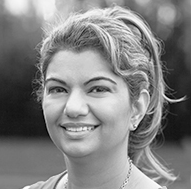
Aditi Mehra, DHSc, OTR/L
Dr. Aditi Mehra is a pediatric occupational therapist with over 25 years of experience across school, clinical, and educational settings. She holds a Bachelorʼs degree in Occupational Therapy from Western Michigan University and a Doctorate in Health Sciences from Midwestern University. During her doctoral studies, she also completed certification training in Behavior Analysis to further deepen her understanding of learning and behavior.
Dr. Mehra is the Director of the Chicago Fit Learning lab, where she integrates Precision Teaching and data-driven learning methodologies to support academic and developmental growth. She is also an Adjunct Professor at Lewis University and develops continuing education trainings for therapists and educators, with a focus on neurodiversity, learning, and AI-supported educational practices.
In addition to her clinical and educational work, Dr. Mehra is currently preparing her first published continuing education presentation and educational resources focused on innovative, evidence-based approaches in therapy and learning.
Related Courses
1https://www.occupationaltherapy.com/ot-ceus/course/social-stories-occupational-therapy-practitioners-6942Social Stories For Occupational Therapy PractitionersThis session introduces occupational therapy practitioners to the core principles and structure of Social Stories™ based on Gray’s framework. Participants will review current evidence on their effectiveness, limitations, and factors that influence outcomes. We will highlight when Social Stories are most useful—such as for social behaviors, transitions, and self-regulation—and when other strategies may be more appropriate. Attendees will learn a clear step-by-step process for developing individualized stories and see how they can be paired with modeling, visual supports, and prompting to support generalization. The session concludes with a brief look at emerging digital and AI-enhanced social narrative tools shaping future OT practice.auditory, textual, visual129USDSubscriptionUnlimited COURSE Access for $129/yearOnlineOnlyOccupationalTherapy.comwww.occupationaltherapy.comSocial Stories For Occupational Therapy PractitionersThis session introduces occupational therapy practitioners to the core principles and structure of Social Stories™ based on Gray’s framework. Participants will review current evidence on their effectiveness, limitations, and factors that influence outcomes. We will highlight when Social Stories are most useful—such as for social behaviors, transitions, and self-regulation—and when other strategies may be more appropriate. Attendees will learn a clear step-by-step process for developing individualized stories and see how they can be paired with modeling, visual supports, and prompting to support generalization. The session concludes with a brief look at emerging digital and AI-enhanced social narrative tools shaping future OT practice.6942OnlinePT120M
'The speaker gave excellent examples of social stories in pediatric OT that were very relevant'Read Reviews
AOTA/0.2 Introductory, OT Service Delivery, Foundational Knowledge, 15041; CE Broker/2.0 CE Broker #20-1363987; IACET/0.2; NBCOT PDUs/2.5 Beginner, Rehabilitation
This session introduces occupational therapy practitioners to the core principles and structure of Social Stories™ based on Gray’s framework. Participants will review current evidence on their effectiveness, limitations, and factors that influence outcomes. We will highlight when Social Stories are most useful—such as for social behaviors, transitions, and self-regulation—and when other strategies may be more appropriate. Attendees will learn a clear step-by-step process for developing individualized stories and see how they can be paired with modeling, visual supports, and prompting to support generalization. The session concludes with a brief look at emerging digital and AI-enhanced social narrative tools shaping future OT practice.
2https://www.occupationaltherapy.com/ot-ceus/course/to-fix-common-handwriting-challenges-5157How To Fix Common Handwriting Challenges In Pediatric TherapyThis course addresses the myriad of underlying issues which can impact handwriting performance, from the basics of pencil grip, letter formation, pace, and the sensory-motor mechanics required for handwriting success. Upon the completion of this course, practitioners will have access to simple step by step strategies with worksheets they can use the very next day to implement fluency-based handwriting interventions and make data based decisions in everyday practice.auditory, textual, visual129USDSubscriptionUnlimited COURSE Access for $129/yearOnlineOnlyOccupationalTherapy.comwww.occupationaltherapy.comHow To Fix Common Handwriting Challenges In Pediatric TherapyThis course addresses the myriad of underlying issues which can impact handwriting performance, from the basics of pencil grip, letter formation, pace, and the sensory-motor mechanics required for handwriting success. Upon the completion of this course, practitioners will have access to simple step by step strategies with worksheets they can use the very next day to implement fluency-based handwriting interventions and make data based decisions in everyday practice.5157OnlinePT60M
This course addresses the myriad of underlying issues which can impact handwriting performance, from the basics of pencil grip, letter formation, pace, and the sensory-motor mechanics required for handwriting success. Upon the completion of this course, practitioners will have access to simple step by step strategies with worksheets they can use the very next day to implement fluency-based handwriting interventions and make data based decisions in everyday practice.
3https://www.occupationaltherapy.com/ot-ceus/course/pediatric-interventions-for-hypoxic-ischemic-6571Pediatric Interventions For Hypoxic Ischemic Encephalopathy (HIE)The course aims to help practitioners improve their understanding of the complexities of hypoxic ischemic encephalopathy (HIE) and compare evidence-based intervention strategies for treating global developmental delays with a real-life perspective from a parent.auditory, textual, visual129USDSubscriptionUnlimited COURSE Access for $129/yearOnlineOnlyOccupationalTherapy.comwww.occupationaltherapy.comPediatric Interventions For Hypoxic Ischemic Encephalopathy (HIE)The course aims to help practitioners improve their understanding of the complexities of hypoxic ischemic encephalopathy (HIE) and compare evidence-based intervention strategies for treating global developmental delays with a real-life perspective from a parent.6571OnlinePT60M
'Learning a new strategy, Vojta, to further research and incorporate into my therapeutic approach'Read Reviews
AOTA/0.1 Intermediate, OT Service Delivery, Foundational Knowledge, 10650; CE Broker/1.0 CE Broker #20-1264533; IACET/0.1; NBCOT PDUs/1.25 Intermediate, Pediatrics
The course aims to help practitioners improve their understanding of the complexities of hypoxic ischemic encephalopathy (HIE) and compare evidence-based intervention strategies for treating global developmental delays with a real-life perspective from a parent.
4https://www.occupationaltherapy.com/ot-ceus/course/magic-mindfulness-evidence-based-guidelines-4532The Magic of Mindfulness: Evidence Based Guidelines for Practicing the Art of Mindfulness in ChildrenThis is an introductory course to the art of mindfulness as an intervention tool for pediatric occupational therapists. Practitioners will gain an insight to the step by step process to not only practice mindfulness for their own wellbeing but will also learn techniques and strategies to effectively teach mindfulness to children.auditory, textual, visual129USDSubscriptionUnlimited COURSE Access for $129/yearOnlineOnlyOccupationalTherapy.comwww.occupationaltherapy.comThe Magic of Mindfulness: Evidence Based Guidelines for Practicing the Art of Mindfulness in ChildrenThis is an introductory course to the art of mindfulness as an intervention tool for pediatric occupational therapists. Practitioners will gain an insight to the step by step process to not only practice mindfulness for their own wellbeing but will also learn techniques and strategies to effectively teach mindfulness to children.4532OnlinePT60M
'Love her take away examples and things I could start implementing tomorrow'Read Reviews
AOTA/0.1 Introductory, OT Service Delivery, Foundational Knowledge, 11873; CE Broker/1.0 Home Study, General (FL), Patient Related (AL), General Continuing Education (GA), Direct Client/patient Services In Occupational Therapy (SC), Related To OT (AZ), Related To OT (LA), Directly Related To OT (MS), Directly Related To OT (TN), CE Broker #20-761460; IACET/0.1; IBCCES/1.0; NBCOT PDUs/1.25 Beginner, Pediatrics
This is an introductory course to the art of mindfulness as an intervention tool for pediatric occupational therapists. Practitioners will gain an insight to the step by step process to not only practice mindfulness for their own wellbeing but will also learn techniques and strategies to effectively teach mindfulness to children.
5https://www.occupationaltherapy.com/ot-ceus/course/teach-handwriting-using-auditory-feedback-5837Teach Handwriting Using Auditory FeedbackPositive reinforcement is an underused yet highly valuable strategy known to motivate students and expedite the learning process. TAGteach is an acoustic form of positive reinforcement utilized to expedite the learning curve in gymnasts, medical students, golfers, etc. Discover how this simple auditory cue can be applied to address handwriting goals faster in OT.textual, visual129USDSubscriptionUnlimited COURSE Access for $129/yearOnlineOnlyOccupationalTherapy.comwww.occupationaltherapy.comTeach Handwriting Using Auditory FeedbackPositive reinforcement is an underused yet highly valuable strategy known to motivate students and expedite the learning process. TAGteach is an acoustic form of positive reinforcement utilized to expedite the learning curve in gymnasts, medical students, golfers, etc. Discover how this simple auditory cue can be applied to address handwriting goals faster in OT.5837OnlinePT60M
'Appreciate the outline, clear information, and real examples'Read Reviews
AOTA/0.1 Introductory, OT Service Delivery, 06007; CE Broker/1.0 General (FL), Patient Related (AL), General Continuing Education (GA), Direct Client/patient Services In Occupational Therapy (SC), Related To OT (AZ), Related To OT (LA), Directly Related To OT (MS), Directly Related To OT (TN), CE Broker #20-989510; IACET/0.1; NBCOT PDUs/1.25 Beginner, Pediatrics
Positive reinforcement is an underused yet highly valuable strategy known to motivate students and expedite the learning process. TAGteach is an acoustic form of positive reinforcement utilized to expedite the learning curve in gymnasts, medical students, golfers, etc. Discover how this simple auditory cue can be applied to address handwriting goals faster in OT.