How does stress management specifically benefit healthcare providers facing high-demand environments?
Answer
Managing stress is essential for healthcare providers to enhance their personal well-being as they navigate increasing patient loads and the pressure to meet outcome metrics such as relative value units (RVUs). By effectively controlling stress, clinicians can significantly improve their quality of life and avoid burnout in high-pressure settings. This practice allows providers to remain fully present with themselves and their families during their time off. Ultimately, maintaining a calm demeanor helps you stay focused and engaged with your patients throughout the workday.
Continued and its subsidiaries provide professional education authored by qualified Subject Matter Experts for continuing education purposes. These materials are intended for educational purposes and do not constitute medical advice or a substitute for individual clinical judgment. Continued is not a clinical healthcare provider; the licensed professional is solely responsible for ensuring that the application of any techniques or information presented is within their legal scope of practice and jurisdictional requirements.
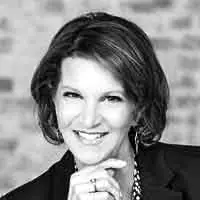
Robin Arthur, PsyD
Dr. Robin T. Arthur is a licensed clinical and consulting psychologist with more than 30 years of experience in mental health, healthcare leadership, and organizational development. Formerly a faculty member of the University of Cincinnati College of Medicine and Chief of Psychology at the Lindner Center of HOPE, she helped establish a nationally recognized mental health hospital.
Dr. Arthur earned her doctorate in clinical psychology from Xavier University and completed postdoctoral studies in neuropsychology at the University of Cincinnati. She specializes in translating psychological science into practical leadership strategies that enhance communication, emotional intelligence, and stress management in healthcare settings to enhance patient care.
A recipient of the Distinguished Psychologist Award from the Ohio Psychological Association, Dr. Arthur develops and delivers continuing education programs nationwide. Her evidence-based, engaging style makes complex behavioral concepts accessible and immediately applicable in clinical and professional practice.
Related Courses
1https://www.occupationaltherapy.com/ot-ceus/course/comprehensive-approach-stress-9653A Comprehensive Approach To Stress Management And Enhancing Well-BeingDesigned for healthcare providers and leaders, this course explores the physiology of stress, its chronic effects on health and performance, and the realities of workplace strain. The content translates science into practice with clear distinctions between adaptive and maladaptive stress, case stories from clinical settings, and actionable tactics such as mindful breathing, movement, and lifestyle foundations. Participants map personal stressors, experiment with rapid regulation tools, and examine habits that restore sleep, focus, and emotional balance. The emphasis is on practical, evidence-informed approaches that cultivate resilience, grounded presence, and better patient care.auditory, textual, visual129USDSubscriptionUnlimited COURSE Access for $129/yearOnlineOnlyOccupationalTherapy.comwww.occupationaltherapy.comA Comprehensive Approach To Stress Management And Enhancing Well-BeingDesigned for healthcare providers and leaders, this course explores the physiology of stress, its chronic effects on health and performance, and the realities of workplace strain. The content translates science into practice with clear distinctions between adaptive and maladaptive stress, case stories from clinical settings, and actionable tactics such as mindful breathing, movement, and lifestyle foundations. Participants map personal stressors, experiment with rapid regulation tools, and examine habits that restore sleep, focus, and emotional balance. The emphasis is on practical, evidence-informed approaches that cultivate resilience, grounded presence, and better patient care.9653OnlinePT120M
Designed for healthcare providers and leaders, this course explores the physiology of stress, its chronic effects on health and performance, and the realities of workplace strain. The content translates science into practice with clear distinctions between adaptive and maladaptive stress, case stories from clinical settings, and actionable tactics such as mindful breathing, movement, and lifestyle foundations. Participants map personal stressors, experiment with rapid regulation tools, and examine habits that restore sleep, focus, and emotional balance. The emphasis is on practical, evidence-informed approaches that cultivate resilience, grounded presence, and better patient care.
2https://www.occupationaltherapy.com/ot-ceus/course/transformative-communication-9654Transformative CommunicationThis course explores transformative communication in healthcare and leadership, contrasting it with transactional approaches. It covers communication barriers and application of the CONNECT model. It also includes evidence-based strategies for emotional regulation, respect, and validation, to foster trust and improve outcomes in challenging interactions. The focus is on developing practical skills to enhance collaboration and psychological safety in daily clinical and leadership practice in healthcare settings.auditory, textual, visual129USDSubscriptionUnlimited COURSE Access for $129/yearOnlineOnlyOccupationalTherapy.comwww.occupationaltherapy.comTransformative CommunicationThis course explores transformative communication in healthcare and leadership, contrasting it with transactional approaches. It covers communication barriers and application of the CONNECT model. It also includes evidence-based strategies for emotional regulation, respect, and validation, to foster trust and improve outcomes in challenging interactions. The focus is on developing practical skills to enhance collaboration and psychological safety in daily clinical and leadership practice in healthcare settings.9654OnlinePT90M
'The course was excellent because it provided practical, evidence-based strategies for improving communication in healthcare'Read Reviews
AOTA/0.15 Introductory, Professional Issues, 15010; CE Broker/1.5 CE Broker #20-1350044; IACET/0.2; NBCOT PDUs/1.88 Beginner, Education And/or Research
This course explores transformative communication in healthcare and leadership, contrasting it with transactional approaches. It covers communication barriers and application of the CONNECT model. It also includes evidence-based strategies for emotional regulation, respect, and validation, to foster trust and improve outcomes in challenging interactions. The focus is on developing practical skills to enhance collaboration and psychological safety in daily clinical and leadership practice in healthcare settings.
3https://www.occupationaltherapy.com/ot-ceus/course/emotional-intelligence-in-healthcare-driving-9655Emotional Intelligence In Healthcare: Driving High-Quality Care And Team PerformanceThis course extends beyond technical skills to examine the profound impact of emotional intelligence (EI) on healthcare professionals. It covers the five core domains of EI and how they directly influence patient outcomes, team collaboration, and stress resilience. In addition, evidence-based strategies are presented to enable course participants to enhance their own EI, improve clinical effectiveness, and enhance leadership capabilities in busy healthcare settings.auditory, textual, visual129USDSubscriptionUnlimited COURSE Access for $129/yearOnlineOnlyOccupationalTherapy.comwww.occupationaltherapy.comEmotional Intelligence In Healthcare: Driving High-Quality Care And Team PerformanceThis course extends beyond technical skills to examine the profound impact of emotional intelligence (EI) on healthcare professionals. It covers the five core domains of EI and how they directly influence patient outcomes, team collaboration, and stress resilience. In addition, evidence-based strategies are presented to enable course participants to enhance their own EI, improve clinical effectiveness, and enhance leadership capabilities in busy healthcare settings.9655OnlinePT90M
This course extends beyond technical skills to examine the profound impact of emotional intelligence (EI) on healthcare professionals. It covers the five core domains of EI and how they directly influence patient outcomes, team collaboration, and stress resilience. In addition, evidence-based strategies are presented to enable course participants to enhance their own EI, improve clinical effectiveness, and enhance leadership capabilities in busy healthcare settings.
4https://www.occupationaltherapy.com/ot-ceus/course/change-management-healthcare-9659Change Management in HealthcareThis course equips healthcare professionals with key change management models to navigate transformations at individual, organizational, and system levels. It emphasizes application of these frameworks to tackle challenges like reducing readmissions. It also highlights the critical role of psychological safety and the ABCs of Change (Awareness, Buy-In, Competence, Support) to foster sustained adoption of change in dynamic healthcare settings.auditory, textual, visual129USDSubscriptionUnlimited COURSE Access for $129/yearOnlineOnlyOccupationalTherapy.comwww.occupationaltherapy.comChange Management in HealthcareThis course equips healthcare professionals with key change management models to navigate transformations at individual, organizational, and system levels. It emphasizes application of these frameworks to tackle challenges like reducing readmissions. It also highlights the critical role of psychological safety and the ABCs of Change (Awareness, Buy-In, Competence, Support) to foster sustained adoption of change in dynamic healthcare settings.9659OnlinePT90M
'This course was excellent because it translated change management theory into practical leadership strategies that can be applied in healthcare settings'Read Reviews
AOTA/0.15 Introductory, Professional Issues, 15465; CE Broker/1.5 CE Broker #20-1361470; IACET/0.2; NBCOT PDUs/1.88 Beginner, Education And/or Research
This course equips healthcare professionals with key change management models to navigate transformations at individual, organizational, and system levels. It emphasizes application of these frameworks to tackle challenges like reducing readmissions. It also highlights the critical role of psychological safety and the ABCs of Change (Awareness, Buy-In, Competence, Support) to foster sustained adoption of change in dynamic healthcare settings.
5https://www.occupationaltherapy.com/ot-ceus/course/disability-inclusion-what-healthcare-providers-5632Disability Inclusion: What Healthcare Providers Need To KnowAs a person with a disability and an occupational therapist, I have a unique perspective of living in two worlds. In this course, I will share my personal experience and things I wish healthcare providers knew and understood about living with a disability.auditory, textual, visual129USDSubscriptionUnlimited COURSE Access for $129/yearOnlineOnlyOccupationalTherapy.comwww.occupationaltherapy.comDisability Inclusion: What Healthcare Providers Need To KnowAs a person with a disability and an occupational therapist, I have a unique perspective of living in two worlds. In this course, I will share my personal experience and things I wish healthcare providers knew and understood about living with a disability.5632OnlinePT60M
AOTA/0.1 Introductory, Foundational Knowledge, 04786; CE Broker/1.0 General (FL), Patient Related (AL), General Continuing Education (GA), Direct Client/patient Services In Occupational Therapy (SC), Related To OT (AZ), Related To OT (LA), Directly Related To OT (MS), Directly Related To OT (TN), CE Broker #20-923997; IACET/0.1; NBCOT PDUs/1.25 Beginner, Education And/or Research
As a person with a disability and an occupational therapist, I have a unique perspective of living in two worlds. In this course, I will share my personal experience and things I wish healthcare providers knew and understood about living with a disability.